Showing posts with label world. Show all posts

Tuesday, 3 September 2019

Germany Has The Coolest Cop Cars In The World

Meanwhile, America's finest drive modified Ford Explorers.

Go to Germany and more than likely the most popular police cars you’ll spot are Volkswagen Passat wagons and the like. Nothing special, right? Of course not. However, spend a bit more time in the bier and wurst-loving country and it’s possible you could see some pretty amazing police cars, many of which we’ve gathered here for your viewing pleasure. Most American police departments purchase Ford Interceptor SUVs, modified Dodge Chargers and Chevrolet Caprices. They’re cool and all but not nearly as cool as, say, a Corvette Stingray with rollers bolted to its roof.

Obviously, all of the German cop cars you’re about to see are unique are not the standard, but they exist (or used to), nonetheless, and many are still on active duty today. So beware, German tourists. If you rent a car be sure to abide by all traffic laws. Otherwise, well, tickets are no fun in any country.

BMW Isetta

Let’s start with German police car from yesteryear. Although the BMW Isetta may not look like much, it certainly has character. With its single “refrigerator” front door, the Isetta would definitely not be our first choice by police duty. However, Germany post-World War II needed to be completely rebuilt and police departments didn’t have a lot of money at the time. Therefore, a vehicle that was simple, reliable and economical was needed and the domestic-built Isetta hit all of those requirements. The Isetta was actually used for police duty in the early 1960s by various departmental regions, such as in Lower Saxony. Modifications were minimal, like dark green paint, radio, and a single blue flashing light. Nothing special, right? Well, a restored Isetta cop car was sold at a 2013 auction for over $86,000.

Porsche 356B Cabrio

On November 23, 1960, a Porsche 356B Cabrio entered service in the Dusseldorf police department. It was not meant to be the start of a fleet of 356s, but rather had a more specific purpose: to patrol the Autobahn. If Autobahn drivers had no speed limits but still did something illegal, then the police would need a vehicle capable of keeping up with them. The BMW Isetta would be the absolute worst choice, hence the 356B’s call to service. This one patrolled the Autobahn for six years before being retired – with nearly 100,000 miles on its odometer. This 356B Cabrio was modified with a larger gas tank, a single flashing light, loudspeaker, an additional brake light, and even water repellent upholstery. Today, this Porsche still exists and is part of a private collection in Belgium. Fun fact: the Dusseldorf police department was the 356th division.

Mercedes-Benz S-Class

Now for something a bit more conventional. Back in 1990, Mercedes-Benz built five modified S-Class sedans specifically for the use of transporting large sums of money. The cars were originally registered with the Federal Police, but the Bundesbank used them the most (for obvious reasons). Although this may appear to be nothing more than a tweaked W126 powered by a 4.2-liter V8, it also carried onboard machine guns, fire extinguishing system, and many other safety features. As you can imagine, one of these Mercs didn’t come cheap, costing taxpayers at the time 650,000 Deutsche Marks, or roughly 1.2 million euros when the German mark to euros was set back in 1999. A couple of years ago, however, one of the surviving S-Class sedans was sold on eBay for just 10,000 euros.

BMW M3

The E36 BMW M3 is still held in high regard 26 years after it originally debuted. It’s really no surprise at least one German police department bought one for intended service. With a total of 321 hp, this E36 M3 was a real nightmare for those who (wrongly) assumed they could outrun cop cars. The E36 M3 was capable of accelerating from 0-62 mph in 5.5 seconds and had a top speed of 155 mph. However, it was entirely possible performance was affected to some degree because of that massive addition to the roof. The lights and loudspeaker system is not exactly a good example of aerodynamics.

Volkswagen e-Golf

Sooner or later an all-electric vehicle would appear as a police car. And here it is: this Volkswagen e-Golf. Hey, probably better than C02 polluting diesel, right? This particular e-Golf was presented to the police back in September 2014. Not only is it zero emissions, but it’s also nearly silent. Speeders will never hear it coming. Then again, chances are this e-Golf didn’t have the performance capabilities to chase down lots of cars. Because it has an outdated all-electric powertrain at this time, it only managed a maximum driving range of 118 miles before requiring a recharge. Imagine you’re a German police officer out on patrol and you’re about to give someone a ticket for whatever reason but you can’t because, embarrassingly, your car has run out of juice.

TechArt Porsche 911 Carrera S

Okay, now we’re talking! Of course a Porsche 911 would show up here sooner or later, and this one just so happens to have been tuned by TechArt. This 911 Carrera S now has a total output of 370 hp and a 0-62 mph time of 4.5 seconds. Top speed? A respectable 186 mph. But wait, aren’t these specs only so-so? They are today, but back in 2005 when this tuned 911 entered service they were pretty badass. Interestingly, the German Ministry of Transportation was the one behind this tuned 911. Teaming up with the Association of German Tuners, it was part of a program to encourage drivers to use only quality components for tuning. Welcome to Germany.

Brabus Mercedes-Benz CLS V12

It was called the Brabus Rocket for a very good reason: 730 hp. This Brabus-tuned Mercedes-Benz CLS is not only your typical police cruiser but also not a normal road car. And, once again, it was built specifically to promote tuning safety. There’s an irony to that. The Brabus Rocket CLS V12 S is powered by a bi-turbo V12 and can reach a supposed top speed of 225 mph. It was built from the get-go for Autobahn duty. Go figure. To this day, this CLS Brabus Rocket remains one of the fastest sedans on public German roads. Picture, for a moment, this thing chasing down banking robbers on the Autobahn. Anyone willing to wager a bet as to who’s fastest? Didn’t think so.

ABT Audi R8 GTR

An Audi R8 modified for police service? Are the German police recruiting these days? We’d be so down for this one. Back in 2011, German tuning firm ABT was commissioned to modify a 5.2-liter V10-powered R8, and the result was this, the R8 GTR. With a new output of 620 hp, police officers could reach 62 mph in only 3.2 seconds and 124 mph in 9.9 seconds. Top speed? How does 202 mph sound to you? So why was ABT paid to build this supercar police car? Once again, it was part of the joint program between the Transportation Ministry and Association of German Tuners. Promoting responsible tuning has never been so much fun.

Mini Cooper JCW

To be clear, like many of the other selections on this list, this Mini Cooper JCW is a show car only. Nothing has changed under its hood, as the turbocharged 2.0-liter four-cylinder with 231 hp remains stock. However, this hot hatch did receive all of the necessary police equipment, including roof-mounted flashing lights and even lights slotted into the hood. A police-approved radio system was also installed. A unique police livery was also applied, complete with paint smudges. The idea was to make this look like the work of street artists because Mini is a youth-oriented brand. No joke. But imagine street artists practicing their art on real police cars. That’s called jail time.

Chevrolet Corvette Stingray

Did we save the best for last? If you’re a Chevrolet Corvette fan then yes. This C7 Corvette Stingray was shipped to Germany specifically for – you guessed it – that government-tuners association program. Its 6.2-liter V8 with 466 hp was left stock, but the coupe’s body received unique police livery, a body kit, flashing lights, loudspeaker, and a telephone with a protected line. But you know when you’re in Germany when the government officials placing the order for the Corvette opted for the seven-speed manual transmission instead of the optional eight-speed slushbox. Did we mention Germany is awesome? If not, we just did.

Saturday, 24 August 2019

1,200-HP Audi Drives In REVERSE For World Record

The Porsche GT2 RS Doesn't stand a chance (even going forward)

There are plenty of cars that can top 130 miles per hour – moving forward. Going backwards, now that's another story altogether. But that's just what this Audi prototype did.

As you might have guessed, this is no ordinary Audi A3. Not an RS3, either, or even the LMS racer. What we have here is Schaeffler Technologies' 4ePerformance concept, a one-off electric prototype with four motors that together generate 1,180 horsepower's worth of battery power. It'll run to 124 mph in under seven seconds, which is quicker than most cars will accelerate to half that speed.

The sponsor of several of Audi's racing programs handed its technological showpiece over to Daniel Abt, son of the famous Audi tuner and pilot of the factory team's Formula E racer (in which he won two races last season). But instead of driving it forward, Abt was tasked with driving it backwards, as fast as he could.

And fast he went, setting a new world record of 130 mph in reverse. The footage was shot in German, but you won't even need the subtitles to see the speed Abt reached, carefully handling the 4ePerformance at speed in reverse.

That was not only enough to beat the previous record (which stood at 101 mph), but trounce a new Porsche 911 GT2 RS in the process. And the Porsche was driving forward, deploying its 690 horsepower to reach 62 mph in 2.8 seconds and top out at 211 mph – moving forward. Going backwards, it's limited (like most cars) by gearing. It may have seven speeds for going forward, after all, but it still has just one for backing up. And an electric vehicle like this one, with its motors driving the wheels directly, suffers no such limitations.

Wednesday, 14 August 2019

Audi Recalls 1.27 Million Cars Around The World

But don't worry, you'll be able to smell if your car is broken.

It's never good when an automaker is forced to recall over 1 million cars. Audi's biggest problem recently has been the repercussions of Dieselgate, but the company has had to deal with a few other recalls. Of all the things that can go wrong with a car, catching fire is probably one of the worst issues. We've seen Mercedes and BMW both issue recalls over possible fire issues, but now it's Audi's turn. Autocar reports that Audi has recalled 1.26 million cars over an electrical issue that could cause a fire.

The 1.27 million cars that are effected by the recall include the A4, A5, A5 Cabriolet and Q5 models built between April 2011 and May 2015. Audi says that the recall is for a fire risk caused by "thermal overload occurring at the plug connectors of the electrical connections in the auxiliary heater due to friction corrosion." The coatings on the connectors also contribute to the fire risk. Friction between the components is created by stress and movement in the components, which create an electrical fire. The recall will fit a new heating element with improved electrical contacts.

Audi says that the recalled cars can still be driven, but owners should pull over immediately if they smell something burning. So far 875,000 cars are affected in Europe, 250,000 in North America and 47,000 in Asia. At least if something is wrong with your Audi, you'll be able to smell it.

Audi e-tron Enters Production Ahead Of World Debut

Audi will lift the covers off the e-Tron in just two weeks.

This week is an important week for the EV industry as Mercedes will be debuting its first electric vehicle, the Tesla-fighting EQC. Its main competitor, the Audi e-tron, is slightly late to the party, however. Originally, Audi was going to lift the covers off the e-tron last month, but the arrest of the automaker’s CEO has delayed the reveal event until September 17th in San Francisco, several weeks after the Mercedes EQC debuts.

To temporarily distract us from the Mercedes EQC’s forthcoming reveal, Audi has announced the e-tron has entered production at the company’s factory in Brussels two weeks before the electric SUV’s world debut. A new teaser shot shows the automaker’s first ever all-electric vehicle hiding under a sheet with a small section uncovered showing the LED headlights and front fascia finished in Misano Red.

Since the summer of 2016, Audi has extensively rebuilt its body shop, paint shop and assembly line and also set up its own battery production to prepare for the Audi e-tron’s series production. Thanks to Audi’s extensive teaser campaign, we already know what to expect from the e-Tron. The automaker has confirmed the e-Tron will utilize two electric motors developing a combined output of 355 horsepower and 414 lb-ft of torque. Activating the boost mode increases the output to 402 hp and 490 lb-ft of torque for up to eight seconds.

Thanks to its large 95-kWh battery pack, the eTron will also offer a range of over 248.5 miles in the WLTP cycle and hit 0-62 mph in less than six seconds. It will be the first production vehicle to feature side cameras instead of conventional door mirrors. Suffice to say, there probably won’t be many new details left to reveal since the production model is expected to closely resemble the e-tron prototype. Nevertheless, as one of the most important model launches in Audi’s history, the e-tron has a lot to live up to, so we’re eager to see if the final production model can deliver.

Wednesday, 26 June 2019

Audi Recalls 1.27 Million Cars Around The World

But don't worry, you'll be able to smell if your car is broken.

It's never good when an automaker is forced to recall over 1 million cars. Audi's biggest problem recently has been the repercussions of Dieselgate, but the company has had to deal with a few other recalls. Of all the things that can go wrong with a car, catching fire is probably one of the worst issues. We've seen Mercedes and BMW both issue recalls over possible fire issues, but now it's Audi's turn. Autocar reports that Audi has recalled 1.26 million cars over an electrical issue that could cause a fire.

The 1.27 million cars that are effected by the recall include the A4, A5, A5 Cabriolet and Q5 models built between April 2011 and May 2015. Audi says that the recall is for a fire risk caused by "thermal overload occurring at the plug connectors of the electrical connections in the auxiliary heater due to friction corrosion." The coatings on the connectors also contribute to the fire risk. Friction between the components is created by stress and movement in the components, which create an electrical fire. The recall will fit a new heating element with improved electrical contacts.

Audi says that the recalled cars can still be driven, but owners should pull over immediately if they smell something burning. So far 875,000 cars are affected in Europe, 250,000 in North America and 47,000 in Asia. At least if something is wrong with your Audi, you'll be able to smell it.

Wednesday, 1 May 2019

5 Affordable Car Dream Garage From Around The World

What would fill our garage if we only had $100,000 to buy a car in five different countries?

Last week, we set out to create a dream garage filled with seven cars from around the globe. The seven cars that we chose were absolutely spectacular, but the garage would have cost close to $1 million in total. We thought we'd take a crack at creating a second dream car list, although this time we limited ourselves to cars that cost less than $100,000 to keep it slightly grounded in reality. We also decided to keep Sweden and Korea off this list, because our choices of the Volvo XC90 and Kia Stinger probably wouldn't change.

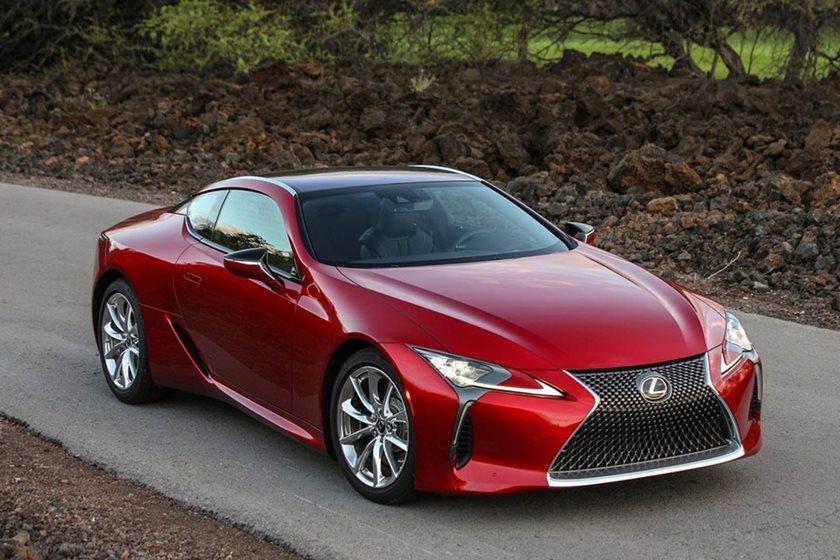
Lexus LC500

First up is Japan, with the Lexus LC500. The LC is the most expensive car on our list with a starting price of $92,000 before destination. Lexus really knocked it out of the park with the styling, and we would be happy to pull up in this head-turning luxury coupe. The LC500 is powered by a 5.0-liter V8 with 471 horsepower going out to a 10-speed automatic transmission. This would be our first choice to go on a weekend retreat, but it lacks the cargo and passenger space to be driven all the time. That is why we have our next car.

Alfa Romeo Giulia Quadrifoglio

The Lexus is a fantastic grand tourer, but sometimes we may need to take a few passengers along for the ride. The Alfa Romeo Giulia Quadrifoglio sedan is ideally suited for the task. This Italian beast is powered by a Ferrari-derived 2.9-liter twin-turbo V6 with 505 hp. Not only does the Giulia have enough room to haul four people around, it is also the second most powerful car on the list. Unfortunately it is also the second most expensive car with a starting price of $73,700.

Range Rover Velar

The Giulia sedan is our practical choice for everyday driving, but we needed something larger to carry big items. We needed an SUV, which is why we turned to the UK. The Velar is Land Rover's latest addition to the Range Rover lineup. The Range Rover Velar is based on the Jaguar F-Pace, and sits between the smaller Evoque and larger Sport. The base Velar sits just under $50,000, but we'd opt for the diesel D180 HSE R-Dynamic trim for just under $70,000.

BMW M2

So far, we have our GT car from Japan, our family sedan from Italy, and our practical hauler from the UK. We wanted to make sure that we had a sports car with a manual transmission that would be perfect to carve up some canyon roads. That's why we have chosen the BMW M2 from Germany. The M4 is the more powerful car, but the lighter, more simplistic M2 would be our preference. The M2 starts at a more modest $54,500 and comes with a turbocharged 3.0-liter inline-six with 365 hp. There is a more powerful M2 Competition on the way, but for now we'll settle for the standard M2.

Chevrolet Camaro ZL1 1LE

The BMW M2 is a great canyon carving road car, but we needed something that is a bit more hardcore for track use. That is why we turned to the US for the Chevy Camaro ZL1 1LE. This $70,000 track weapon is one of the best values in the auto industry. Less than $100,000 gets you 650 hp from a 6.2-liter supercharged V8. The 1LE also comes with hardcore aero enhancements that make it one of the quickest cars in the world around a track, especially at its low base price. The standard ZL1 is a comfortable cruiser, but the 1LE is built specifically for track use.

Monday, 15 April 2019

Audi e-tron Prototype First Drive Review: Tomorrow's World Today

We take a ride into the near future.

As we have seen from the future automobile tech on display at the CES in January, Artificial Intelligence is already present in automobile infotainment systems while the march towards electric cars and autonomous driving continues apace. On the alternative fuels front, Toyota and Mercedes have acknowledged the reality that the existing global electrical grid infrastructure simply cannot support a mass move towards electric cars. Thus, these two automotive giants are also hedging their bets with Hydrogen F-Cell models developed in parallel with their electric vehicles, and the first production cars will go on sale before year’s end.

Meanwhile, Audi has developed some great alternative power solutions including fuelling combustion engines from the gases realized by biomass. This has the added advantage of controlling some aspects of rubbish disposal while creating an environmentally friendly use for one of its by-products.

Audi is certainly far down the road with their own electrification programme, which goes by the evocative ‘e-tron’ name, which for many instantly conjures up images of ‘Tron’ the famous 1982 sci-fi movie. The first production e-tron vehicle will be a Q5 sized SUV, a natural choice given the popularity of this vehicle genre across the globe. It will be rolled out in production form at the end of this year, and to build up excitement and momentum towards its impending arrival date Audi has embarked on a tiered media event strategy for the intervening months.

The first of these events took place in Copenhagen with camouflaged e-tron pre-production cars, with the focus of this first ride experience being the cars bespoke interior and infotainment system. Before taking to the streets we were given a virtual demonstration of what to expect in the new cabin using the interactive 3D wireframe model and VR glasses whose head-tracking feature allowed us to click on specific areas for more detailed information. This simulation also enabled us to ‘examine’ the e-tron’s audio system in detail.

Audi interior designer Thomas Pinet presented the e-tron cabin in a most convincingly way with impressive multi-media support on stage at the Royal Danish Playhouse in Copenhagen. The new best thing that Pinet describes as “wrap-around” sets these newly familiar elements up against a cascading dashboard reminiscent of a miniature theatre stage. Presenting the new Audi e-tron via the back door and onto center stage made this seem like a full-size extension of that concept.

It must be said though that he did not actually start off with a sheet of white paper here as. Some of the ideas, such as the rationalized transmission tunnel and resulting airy center console, along with the two MMI touch response displays and the virtual instrument cluster, are already familiar elements in the cabin designs of the new A6, A7 Sportback, and A8. The moment we took the driver's seat of the Audi e-tron on the hallowed stage any skepticism about the low-mounted virtual rear-view mirrors evaporated. Together with the instruments and the most important touch functions, these virtual mirrors form part of the clear panoramic information arc spanning the cabin front below the windshield.

The interior rearview mirror remains analog, and that is a good thing. The cockpit illumination is by discreet LED strips angled towards the driver, and these provide a very cool effect when darkness falls. A leather-covered pad that includes the driving control provides hand support whilst operating the lower touch functions. So far this is the most convincing touch concept you can reasonably use whilst driving.

The black backgrounds of the dual touch screens minimize reflections and driver distraction, while Audi has introduced haptic feedback for the large, virtual easy-to-hit-on-the-move buttons that utilize a similar operating technology to the home button on the iPhone 8. Meanwhile, certain functions are still accessed via conventional buttons and knobs, our favorite being the Volume control for the audio system. Importantly, the hazard warning lights are also operated by an easy to find touch button.

As expected Audi has developed a usable voice control module, but a demonstration was not part of our test ride in this prototype. That said, what the engineers described to us implied that it works in a similar way to the MBUX system in the new Mercedes A-Class.

For all this innovation Audi seems to know when to stop short of crossing that fabled bridge too far. Compared to Tablet PC in cars like as the Tesla Model 3, the new Audi MMI seems almost conservative and proves that Audi does evolution rather than revolution where necessary, respecting the fact that paying customers are not all PlayStation junkies.

Once again Audi uses the 3D sound system jointly developed with Bang & Olufsen and Fraunhofer. Enhanced by the Fraunhofer Symphoria algorithm, this system made its debut in the current Audi A4 and then rolled out in the A8, A7 Sportback, and A6. We had the opportunity to experience this essentially touch screen-based system on the road in Copenhagen, albeit from the passenger seat.

There is no doubt that the mix of engine noise and the environment whizzing past stimulates this petrolhead, and is also in the DNA of every car enthusiast. Remove this aural input and suddenly you realize how many environmental noises the sound of a combustion engine masks in a moving vehicle. Our past experiences with electric cars have always seemed at odds with their lack of engine noise because the rolling noise of tires on tarmac becomes all the more heightened.

The theme here is not just in-car entertainment, but also the entire staging of electric driving as a near-silent aural experience. It was thus pleasing to note that Audi has gone to great lengths to banish any intrusive external noises from the e-tron cabin. For starters, the electric motor transmission unit positioned in the center of the multi-link rear axle features elastic mounts to reduce mechanical vibrations, while the sub-frame is decoupled from the bodyshell by bespoke rubber bushes. Similar sound and vibration isolation measures have been taken with the electric motor that drives the front axle.

It all seems to work as advertised, and the Audi e-tron starts soundlessly and remains extremely quiet even under the full acceleration sprint that Rupert Spielvogel, the man responsible for the cars user interface, was happy to demonstrate.

Instead of the “electric-tram-at-speed” sound made by the Tesla and other electric cars, the e-tron merely generates a distant whistle, even under full power. The counterpoint is a distinct absence of the noises required to warn errant pedestrians from crossing in front of this electric car. Audi say they have the issue in hand, but no external noise-generating device was installed on this prototype. Where you would expect to find the motor under the hood of a normal car the e-tron has no additional luggage compartment, only a flat shelf with a compartment to house the charging cables.

On that score, thanks to Audi’s bespoke double-sided charging bays, the e-tron is also set to gain a head start in the charging station race. We were told that their 150 kW fast-charger takes 30 minutes to deliver an 80-percent charge good for up to 248 miles of normal driving.

The Audi e-tron’s near silent cabin allows Bang and Olufsen's premium 3D sound system to show its full potential at both city and highway speeds. The acoustics team, led by Wolfram J?hn - who was also responsible for the sound system in the new Audi A8 - focused on extending spatial representation and populating the soundstage with the highest levels of aural detail. The Bang & Olufsen premium 3D sound system in the Audi e-tron provides a big sound show, its 16 speakers able to deliver speech and music without the handicap of mortal combat with a growling combustion engine. In fact, the system does not have to fight rolling noise either, and our tour through Copenhagen showed just how effective the acoustically insulated wheel arches are as road noise filters.

What remains is pure audio akin to what you might experience at home in your living room. Output from the 3D speakers positioned high in the A-pillars and the center-speaker reflecting off the windscreen significantly increases the soundstage in the vertical plane. Even applause during live recordings sounds quite authentic.

The 3D sound effect can be tailored to individual preferences in three steps, while a virtual slider on the Touch MMI’s 7-inch OLED display allows you to continuously adjust the surround effect.

From the passenger seat some discoloration in the vocal bandwidth, and glitches in image stability detracted from a totally convincing audio experience. However, it is important to remember that this car was a prototype, and high-end car audio systems are often optimized with more bias towards the driver regardless of the selected setup.

Audi says the system benefits greatly from the symphonic algorithm B&O developed in cooperation with the Fraunhofer Institute in Erlangen. This calculates the information with semantic abilities to distinguish between direct sound and spatial components from stereo or 5.1 recordings in the third dimension and prepares them for the 3D speakers.

The low-midrange drivers of the 705-watt B&O system are housed in their own enclosures and integrated into the front doors. This creates the best conditions for controlling bass frequencies while shielding the output of the speakers from the environment. This has the added benefit of keeping conversations private when you are making a hands-free phone call. The deep bass frequencies are the responsibility of the bespoke 200mm diameter dual voice coil subwoofer built into a narrow and rugged integrated package at the back of the trunk.

While low frequencies are omnidirectional and more tolerant of background noise there was no question that the absence of road noise allowed our ears to detect the nuances this high quality powered sub-woofer is able to generate. As with a good home audio set-up the quiet environment also mercilessly revealed the variation in quality of low-frequency reproduction across the music test tracks stored on the hard disc.

Our short city tour of Copenhagen from the passenger seat was far from enough for a proper judgment of the forthcoming e-tron, but it certainly whetted our appetite for more, which is exactly what Audi intended. Watch this space for the next chapter in the e-tron story.